
Replacing only part of a roof can be more complicated than choosing a similar-looking shingle. A successful match depends on color, texture, size, exposure, installation pattern, weathering, and the condition of the surrounding roof. For homeowners in Lyons, NY, seasonal sun, snow, wind, and moisture can make differences between old and new shingles more noticeable over time.
What does it mean to match replacement shingles?
Matching replacement shingles means selecting new roofing material that blends as closely as possible with the existing roof in appearance, dimensions, and performance.
A visual match is only part of the process. The replacement shingle should also be compatible with:
- The existing shingle type
- The roof’s slope
- The installation method
- The underlayment and flashing details
- Local exposure to wind, rain, ice, and snow
A shingle can look similar on a store shelf but appear noticeably different once installed beside shingles that have aged for several years.
Why is an exact color match difficult?
Roofing shingles change color as they weather. Ultraviolet light gradually fades exposed surfaces, while rain, snow, airborne dirt, algae, and temperature changes can alter the roof’s appearance. Even shingles from the same manufacturer and color line may not match perfectly if they were produced in different batches.
A new shingle may look darker, brighter, or more sharply patterned than the surrounding roof. This contrast is often strongest immediately after installation and may soften slightly as the new material weathers.
The visible color can also change depending on:
- Whether the roof is wet or dry
- The angle of sunlight
- The roof’s slope and viewing distance
- Accumulated dirt or biological growth
- Shingle granule loss on older sections
Photographs can help identify a general color family, but they are not reliable for confirming an exact match. A sample viewed outdoors beside the existing roof usually provides a better comparison.
How can homeowners identify the existing shingles?
Start by checking leftover materials from the original roof installation. Spare bundles may be stored in a garage, attic, shed, or basement. The wrapper can reveal the manufacturer, product line, color name, lot information, and approximate installation date.
If no original materials remain, examine the shingles themselves. Useful details include:
- Three-tab or architectural design
- Shingle dimensions
- Number and shape of exposed tabs
- Surface texture and shadow lines
- Granule color pattern
- Manufacturer markings on the underside
- Nail placement and seal-strip location
The roof’s age can narrow the possibilities, but it does not identify a product by itself. Manufacturers change color names, product designs, and dimensions over time. Older shingles may also be discontinued.
A small removed piece, if available, can be compared with current samples. Removing shingles should not be attempted casually, especially during cold weather or when the surrounding material is brittle.
Can discontinued shingles be matched?
Sometimes, but an exact replacement may not be available. Roofing products are periodically redesigned or discontinued, and older color blends may no longer be manufactured.
Possible options include:
- Locating unused material from an earlier installation
- Searching for compatible stock from older inventory
- Using a current shingle with the closest available color and profile
- Replacing a larger, visually defined roof section rather than a single shingle
The best choice depends on how visible the repair will be and how much of the surrounding roof remains serviceable. A close match may be reasonable for a small repair in a low-visibility area, while a prominent repair may look better if the entire roof plane is replaced.
Does shingle age affect the match?
Yes. Age affects both color and physical condition. Older shingles may have faded, lost granules, curled at the edges, or become less flexible. New shingles installed among deteriorated materials can create a noticeable patch even when the color is close.
More importantly, old shingles may not tolerate repair work. Attempting to lift brittle shingles can cause cracking or additional damage. In colder weather, asphalt shingles become less flexible and are more likely to break during handling.
For homes exposed to Lyons winters, the condition of the existing roof should be considered alongside appearance. A repair that matches visually but damages surrounding shingles may create a larger problem.
Are shingles from different brands interchangeable?
Not automatically. Shingles with similar dimensions may still differ in thickness, exposure, adhesive-strip placement, nail-line location, and required installation details.
Mixing products can lead to:
- Uneven lines across the roof
- Gaps or misaligned tabs
- Improper sealing
- Visible differences in thickness
- Greater risk of wind-related lifting
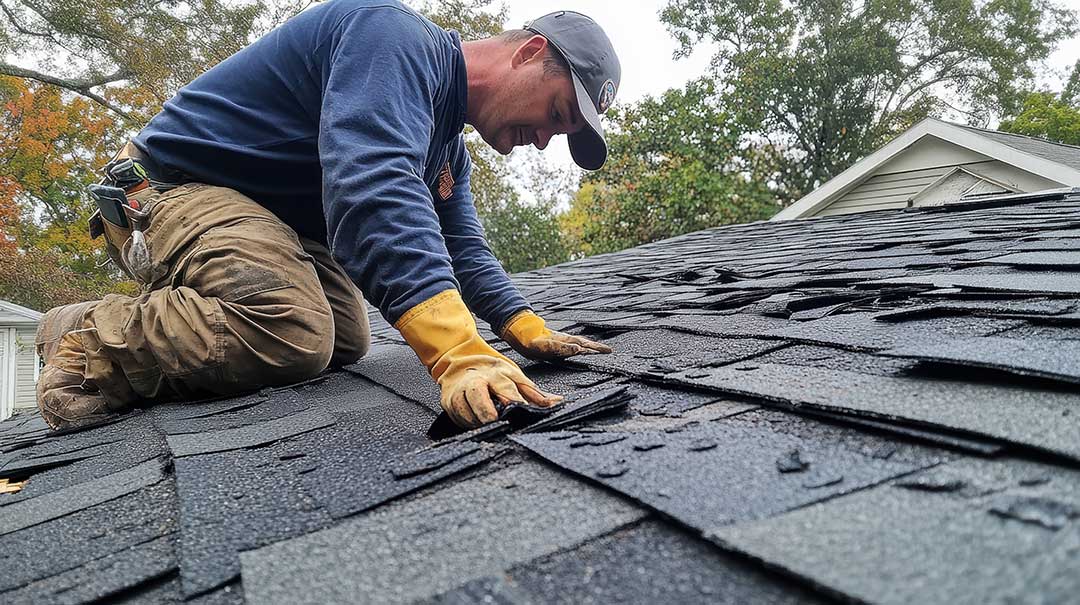
Compatibility should be evaluated based on the manufacturer’s installation requirements and the existing roof design. A shingle that appears to fit may not perform correctly if it is not installed with the proper overlap, fastener placement, and sealing method.
What should be checked before replacing a few shingles?
The repair area should be inspected for more than the visible damage. Missing or damaged shingles may result from wind, fallen branches, ice, poor flashing, or age-related deterioration.
Check for:
- Exposed underlayment
- Damaged roof decking
- Lifted or missing fasteners
- Cracked flashing
- Deteriorated pipe boots or vent seals
- Granules collecting in gutters
- Water staining in the attic
- Repeated damage in the same location
If water has reached the decking or attic, replacing the surface shingle alone may not address the cause. Roof leaks can travel along framing before appearing indoors, so the visible stain may not be directly below the damaged shingle.
Is a color match enough for a sound repair?
No. A proper repair also requires matching the shingle profile, dimensions, installation pattern, and condition of adjacent materials.
The replacement should sit flat, align with neighboring courses, and seal appropriately. Fasteners should be placed according to the shingle design rather than simply copying the location of a damaged piece. Excessive or misplaced nails can create leaks, while insufficient fastening can increase wind vulnerability.
Cold temperatures may also affect the self-sealing strip. During cooler seasons, shingles may require additional care to ensure they remain properly bonded. Wind, freeze-thaw cycles, and snow accumulation can expose weaknesses in a repair that looked acceptable at installation.
When is replacing a larger section more practical?
A larger section may be more practical when the original shingles are discontinued, badly weathered, or no longer flexible enough to repair safely. Replacing a defined roof plane can produce a more uniform appearance than scattering new shingles across an aging surface.
Larger replacement may also be appropriate when:
- Damage affects many adjacent shingles
- The roof has widespread granule loss
- Shingles are curling or cracking in multiple areas
- A storm caused broad surface damage
- The repair would require disturbing fragile surrounding materials
The decision should account for both appearance and remaining service life. A small patch on a roof near the end of its useful life may only postpone a more extensive repair.
What should Lyons homeowners keep for future repairs?
Keeping records can make future matching easier. Useful information includes the installation year, product name, color, photographs of the roof, and any leftover bundles.
Store spare shingles flat in a dry, protected location. Do not leave bundles where repeated moisture, extreme heat, or heavy objects can damage them. A labeled bundle can be valuable several years later, particularly if the product is discontinued.
After major wind or winter weather, a visual inspection from the ground can help identify missing shingles or changes in roof appearance. Walking on the roof is unnecessary and can damage shingles or create a fall hazard. Leaks, steep slopes, unstable surfaces, and work near electrical or overhead hazards require appropriate safety measures and may warrant qualified assistance.
