
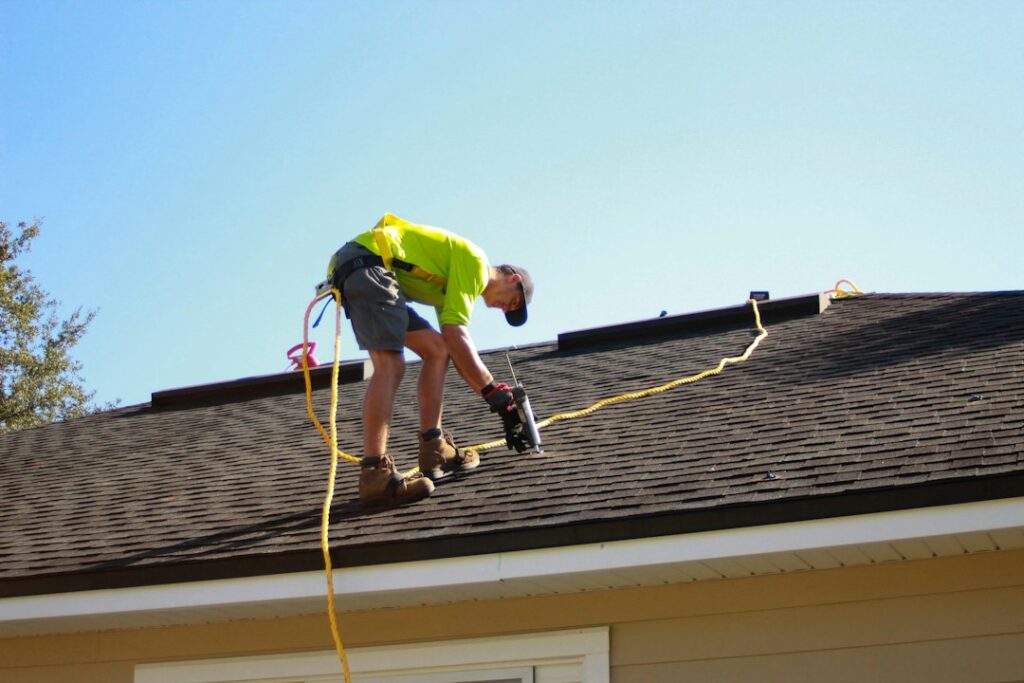
Which tools are actually needed for basic roof maintenance?
For most homeowners, roof maintenance does not require a large collection of specialized equipment. A small set of tools can help with visual inspections, gutter care, minor surface cleaning, and documentation without encouraging unsafe repairs.
The most useful tools include:
- A sturdy extension ladder with slip-resistant feet
- Ladder stabilizers or stand-off arms
- Soft-soled, slip-resistant footwear
- Work gloves with good grip
- Safety glasses
- A flashlight or headlamp
- A tape measure
- A notepad or phone camera
- A soft-bristled roof brush
- A plastic scoop for gutters
- A garden hose with a gentle spray setting
- A caulking gun for approved exterior sealants
- A utility knife and small hand tools for ground-level work
These tools are mainly for observing conditions and keeping drainage areas clear. They should not be treated as permission to walk on a steep, wet, icy, fragile, or visibly damaged roof.
What ladder equipment makes inspection safer?
A ladder is often the most important roof-maintenance tool because many problems can be seen from the eaves, gutters, or a nearby window without stepping onto the roof. The ladder should be placed on firm, level ground and extended high enough to provide a stable handhold above the roof edge when accessing a low-slope area.
A ladder stabilizer can keep the rails away from gutters and reduce side-to-side movement. It also spreads contact across a wider section of the roof edge instead of concentrating pressure in one spot.
Before climbing, check that:
- The ladder is free of bent rails, damaged feet, or loose hardware.
- The ground is not muddy, icy, or covered with leaves.
- The ladder is not resting on a gutter, downspout, roof edge, or other unstable surface.
- Doors, driveways, and walkways are protected from unexpected traffic.
- Wind, rain, frost, and wet surfaces are not creating hazardous conditions.
In Lyons, seasonal moisture, freezing temperatures, and snow can make ladder placement less reliable than it appears from the ground. A ladder that was secure in dry weather may shift on softened soil or icy pavement.
Why are soft-soled shoes and gloves important?
Roofing materials can become slippery from rain, frost, algae, moss, or loose granules. Soft-soled shoes with a clean tread generally provide better traction than hard-soled work boots. Shoes should be inspected before use because packed mud or worn tread can reduce grip.
Gloves serve two purposes: protecting hands from sharp metal edges and improving control while handling gutter debris or tools. A glove with a flexible, textured palm is usually more useful than a thick glove that makes it difficult to grip a ladder or small object.
Safety glasses are also worthwhile. Gutter debris may include dried leaves, roofing granules, insect nests, and small pieces of deteriorated material that can fall unexpectedly.
What tools help inspect the roof without walking on it?
A flashlight or headlamp helps examine attic spaces, roof overhangs, and shaded areas around vents. Dark streaks, damp insulation, daylight visible through roof boards, or water marks may indicate conditions that deserve closer attention.
A tape measure can document the size of a damaged area, gutter sag, missing flashing, or a displaced component. Measurements are more useful when paired with photographs and a date.
A phone camera is one of the most practical inspection tools. From the ground or a safely accessible location, photographs can record:
- Missing or lifted shingles
- Rusted or separated flashing
- Sagging gutters
- Damaged soffits or fascia
- Tree branches touching the roof
- Granules collected near downspouts
- Moss or organic growth
- Areas where snow or ice has repeatedly accumulated
Photographs help distinguish a new issue from an older one and make it easier to monitor gradual changes after storms.
Which tools are appropriate for gutter maintenance?
Gutters and downspouts should be checked because roof drainage problems can damage fascia, siding, trim, foundations, and nearby landscaping. A plastic gutter scoop is safer for removing wet leaves than a metal tool, which can scratch or puncture the gutter.
A bucket attached to a ladder can be convenient, but it can also create a dangerous imbalance if overloaded. A lightweight debris bag placed on the ground may be safer. Never carry bulky objects while climbing.

After clearing loose debris, a garden hose with a gentle spray can help test whether water moves toward the downspout. Strong pressure is unnecessary and may force water behind flashing or under roofing materials.
Watch for:
- Water remaining in sections of gutter
- Drips from seams
- Downspouts that discharge beside the foundation
- Gutter sections pulling away from the roof edge
- Ice buildup or repeated overflow
- Splashing that erodes soil below
Cleaning should be done only from a stable position. If the gutters require frequent climbing, a telescoping cleaning tool may allow some work from the ground, although it does not replace a proper inspection when damage is suspected.
What should be used to remove moss, leaves, or surface debris?
A soft-bristled brush can remove loose leaves and small amounts of surface debris from a safely accessible, low-slope area. The brush should be used gently and in a direction that does not lift shingle edges.
Aggressive scraping, pressure washing, or stiff wire brushing can remove protective granules and shorten the life of asphalt shingles. Moss should not be pulled forcefully because it may be attached to the roofing surface.
A roof rake may help remove snow from some low-slope roofs, but it must be used carefully. Removing every bit of snow is not always necessary, and dragging a rake across shingles can cause damage. Snow removal becomes especially risky when ice, steep slopes, overhead wires, or heavy accumulations are involved.
Are sealants and repair tools safe for routine use?
A caulking gun, utility knife, screwdriver, and small pry bar may be useful for limited ground-level maintenance, such as replacing a loose exterior fastener or applying an approved sealant to a non-roofing trim joint. They are not substitutes for proper roofing repair knowledge.
Roof leaks are often difficult to trace. Water can travel beneath shingles or along roof decking before appearing indoors. Applying sealant to the visible interior stain or coating a suspected roof area may hide symptoms without correcting the source.
Avoid using roofing cement as a general-purpose patch. Excess material can interfere with drainage, trap moisture, or make later repairs more difficult. Do not cut, puncture, or remove roofing materials unless the work is clearly understood and can be performed safely.
What tools should not be used on a roof?
Several common tools can create more damage than they prevent:
- Pressure washers, which can strip granules and force water beneath roofing materials
- Metal shovels or scrapers, which can tear shingles
- Wire brushes, which can abrade protective surfaces
- Improvised ladders or stacked objects
- Leaf blowers used at close range on fragile roofing
- Long-handled tools used near electrical lines
- Nail guns or power tools used without a clear repair plan
A roof is not a suitable place to experiment with tools. If the roof deck feels soft, the surface is steep, shingles are brittle, or structural damage is visible, the safest choice is to remain on the ground.
How often should these tools be used?
A practical maintenance routine includes a ground-level inspection in spring and fall, plus another check after major wind, hail, or heavy snow. Gutters may need more frequent attention if trees overhang the roof.
In spring, look for damage from ice, snow, and freeze-thaw movement. In autumn, remove leaves before they hold moisture against roofing or block drainage. During winter, avoid climbing whenever surfaces are icy or snow-covered.
Tools are most useful when they support safe observation, careful documentation, and basic drainage maintenance. They should never replace caution around steep roofs, electrical hazards, unstable ladders, structural concerns, or conditions that cannot be clearly evaluated from a secure position.
